Interview / Asia Hundreds
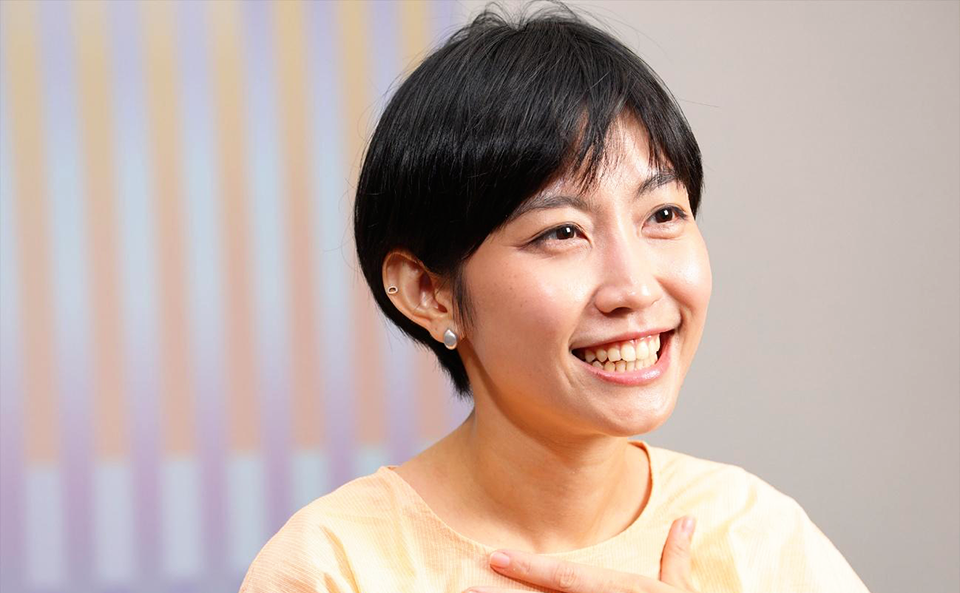
In recent years, the global art world has increasingly sought out new voices like Hanoi-based Le Thuan Uyen, one of Vietnam’s most thoughtful and dedicated contemporary art curators. Uyen shares her reflections on how the Japan Foundation’s Condition Report and festivals like Setouchi Triennale 2025 have influenced both her work and her outlook on the evolving art scene.

ASIA HUNDREDS is a series of interviews and conference presentations by professionals with whom the Japan Foundation Asia Center works through its many cultural projects.
By sharing the words of key figures in the arts and cultures in both English and Japanese and archiving the "present" moments of Asia, we hope to further generate cultural exchange within and among the regions.
An Unexpected Path to Curatorship
As Le Thuan Uyen explains it, the Japan Foundation Asian Center’s Condition Report, a collaborative art project by curators from Japan and Southeast Asian Countries, deepened her understanding of the different types of curatorial work. It expanded my perspective—not just the challenges, dedication, and time required, but also on understanding myself and what I can do.
Her words reflect the decisive role such cross-cultural initiatives play in amplifying young voices and shaping sustainable cultural systems.
Uyen’s entry into the art world began while she was studying political science in Britain. Originally aspiring to work in government, she found herself contemplating a different path after visiting an exhibition on the Bauhaus school at London’s Barbican Centre. It totally changed me,
she says of her encounter with the then unfamiliar world of abstract art. There were things that I’d never seen. The experience triggered something. It opened me up to entirely new possibilities.
Young and curious to try something new, she undertook a Barbican internship in 2012 and went on to earn her MA in creative industries, saying I wanted to be a part of a network that supported creative talents.
Returning home in early 2014, she discovered that the art scene in Vietnam was much more underground and less mature than places like the UK, Japan, or even closer neighbor such as Indonesia.
She joined the vibrant circle surrounding Nha San Collective, while beginning a five-year mentorship with artist-curator Tran Luong, who introduced her to different artist groups and the unique conditions that Vietnamese art has evolved over time.
It was the artists themselves who encouraged Uyen’s transition to curatorship. With so few curators, artists needed people to walk with them on their very long journey,
she explains. She adds that she was already doing some level of curatorial work as there was little separation between the various roles in the small scale of Vietnam’s art world.
The Condition Report: A Transformative Experience
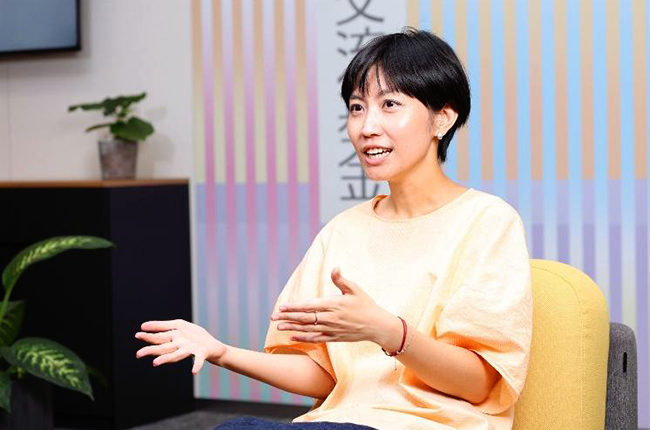
Uyen says she initially rebuffed her colleagues’ entreaties to don the curator mantle, but recognizing the invaluable learning opportunity of the Condition Report, she submitted a proposal with the JF’s Hanoi office.
The project, which consisted of six parts with “What is Southeast Asia?” as its general theme, proved the catalyst she needed. The program offered participants unprecedented exposure to different models of art presentation and circulation, including a study trip where emerging curators from different countries traveled throughout Japan visiting museums and art spaces.
It was the first time that I was in a cohort with so many colleagues from other countries in Southeast Asia, and Japan as well,
Uyen recounts. She says the trip forced her to express the ambitions and values guiding her on her curatorial journey. It was a great opportunity for me to realize that this is serious—it’s not just helping out artists at home.
The ethos of Condition Report emphasizing flexibility, collaboration, and an awareness of context proved invaluable. By observing how curators worked within various institutional frameworks and drawing comparisons with peers from across Asia, Uyen says she gained crucial understanding of how different art scenes develop. In Vietnam, my work as a curator would involve very close collaboration with artists. Sometimes curators would also assume the role of a producer. Whereas in Japan, a much more mature scene, the work is more defined and more professionalized.
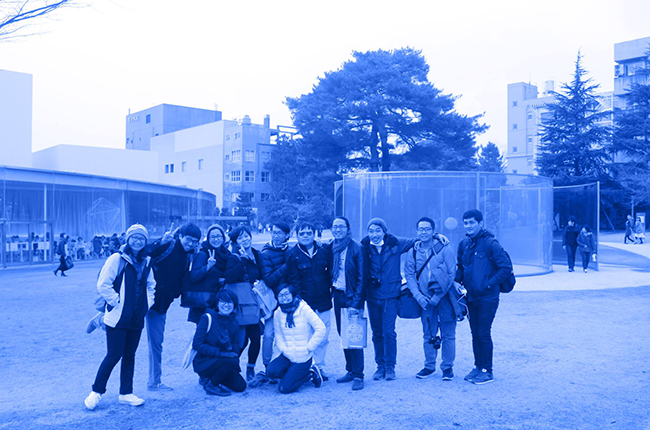
The junior curators of Condition Report during their initial research trip to Japan in 2016.
Building Networks
The next phase of the program paired participants with two mentors—one Japanese and one Southeast Asian curator. Working under Iida Shihoko from Japan and Ade Darmawan from Indonesia, Uyen was exposed to their contrasting curatorial approaches. Iida-san is more organized, calm, and reflective,
she describes. Ade-san is very responsive and sensitive. He has a way of working with artists who are not familiar with institutional structures and is very flexible.
Working on a project in Jakarta, Uyen lived and labored side by side with her colleagues as they busily organized a residency workshop in one month. The ambitious undertaking taught crucial lessons about structure and trust in curatorial practice. The takeaway was it is important to have some sort of structure,
Uyen reflects. Working with artists, I learned that trust is also important because it doesn’t matter how much you plan and prepare, something can always go wrong.
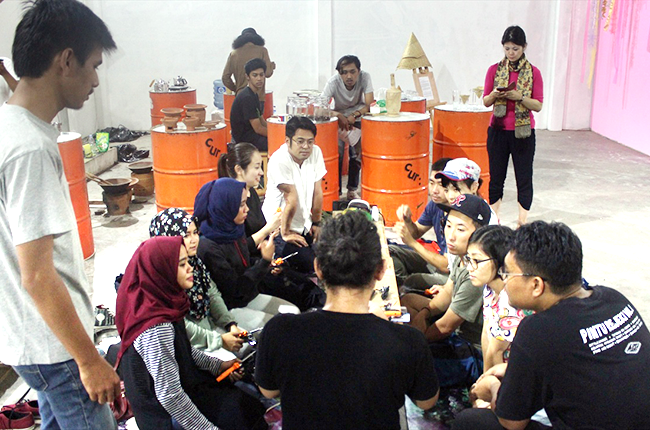
Members of the group Waf Lab work during the opening weekend of the collaborative exhibition Sindikat Campursari in Jakarta, Indonesia, in 2016.
One of Condition Report’s most significant impacts was fostering lasting professional relationships across Southeast Asia and Japan. Through the project, I have very close friendships that I still keep,
Uyen shares, mentioning colleagues from Malaysia, Japan, and Thailand who continue supporting each other’s endeavors.
The cross-cultural exchange proved particularly valuable for expanding Uyen’s perspectives beyond Vietnam’s relatively closed cultural context. She says that the Vietnam of her childhood in the early 1990s, right after economic and other reforms but before the country drastically changed, was still quite closed off to the world in terms of the mentality of the people. These exchanges expanded my perspective and challenged my prejudices. It allowed me to develop a more tactful and real physical and spiritual sense.
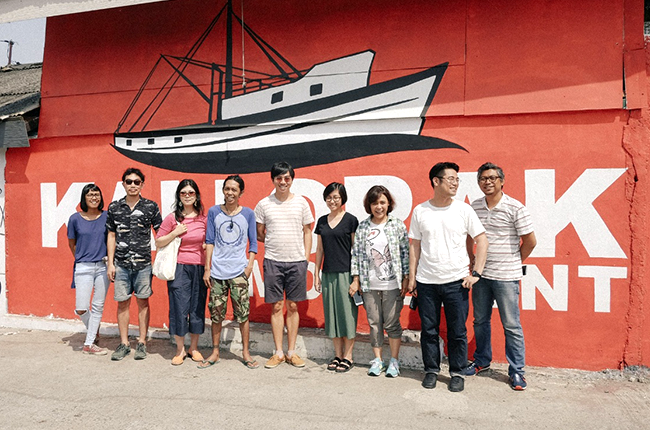
Photo from the Jakarta group’s first research trip in Indonesia.
Transforming Vietnamese Art Understanding
The experience also fundamentally shifted Uyen’s understanding of institutions, which she initially viewed as bureaucratic and hindering the development of artistic experimentation. Realizing the role institutions play in developing art scenes, she says that it’s important to have a more constant factor in the equation where artists can continue to experiment in more alternative spaces but also have a space where the narrative can hold and everyone else can respond.
This perspective proved crucial as Vietnam’s art scene undergoes significant changes, including the rise in prominence of institutions in the country funded by private organizations, collectors, and corporations. While acknowledging the varying aspects of this transition, Uyen emphasizes the importance of active participation in shaping this evolution constructively.
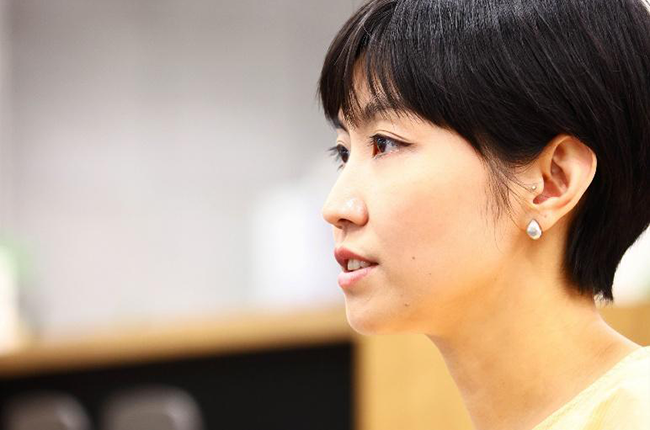
Setouchi Triennale 2025: New Narratives
Uyen’s participation as curator of the Vietnamese Contemporary Art Exhibition at the Setouchi Triennale 2025 represented an opportunity to present works beyond familiar narratives. She notes that the presentation of Vietnamese art in Japan was still quite scattered and limited
and often dominated by certain themes such as the Vietnam War.
Her exhibition responded by showcasing young artists from her generation, addressing the generational shift in how Vietnamese artists engage with their country's history. She explains that the Vietnam grappling with the legacy of war is not the Vietnam that she grew up with. My generation lived with the memory of the war, but it’s not our memory. We grew up when the Internet was starting to enter. I often think that my coming of age aligns with that of the nation’s, with the idea of Vietnam as a modern independent nation.
Cultural Resonances
Working on the Setouchi Triennale 2025 revealed unexpected cultural connections between Japan and Vietnam. Despite surface differences, underneath our value system is very much rooted in Eastern aesthetics and philosophy,
she observes. The hierarchy in the home, in society, all these different details are coded in the language that we use.
Uyen’s journey illustrates the profound impact structured cultural exchange programs can have on individual practitioners and broader artistic communities. The Condition Report project provided practical training and a framework for understanding art’s role in cultural dialogue and regional development. Uyen’s experience demonstrates that successful cultural exchange programs create lasting changes in how participants understand their own contexts and possibilities for collaboration.
Her philosophy of empathetic curiosity, cultivated through cross-cultural exchange, remains central to her curatorial practice. As she continues building bridges between Vietnam’s evolving art scene and the wider world, she exemplifies how thoughtful cultural exchange can nurture both individual growth and broader artistic community development across cultural boundaries.
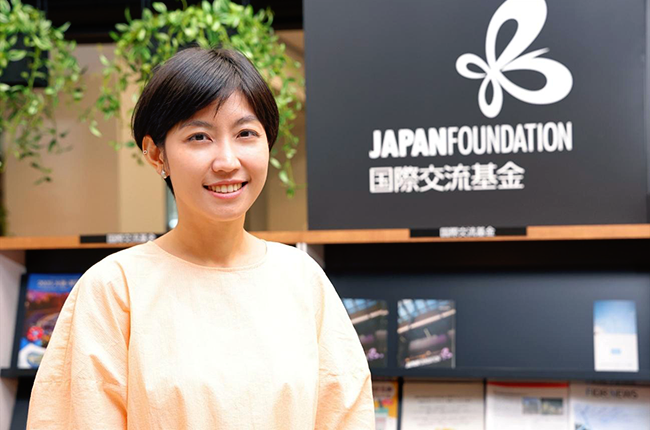
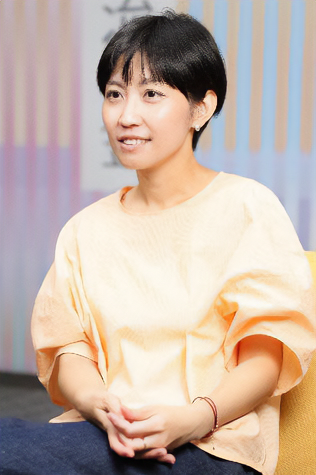
Le Thuan Uyen
Independent curator based in Hanoi. She is currently the Artistic Director of The Outpost, a private organization committed to the collection, presentation, and discussion of contemporary art in Vietnam. Since 2014, she has collaborated with numerous artists and organizations, providing administrative and programming support for spaces like Nhà Sàn Collective, Sàn Art, and The Factory Contemporary Arts Centre. She has worked on a broad range of curatorial projects, including the Japan Foundation’s Condition Report project, where she was part of the collaborative exhibition Sindikat Campursari in Jakarta, and A Choreography of Resonance at the Setouchi Triennale 2025, a reflection of contemporary Vietnamese society through the expressions of a new generation of artists.